

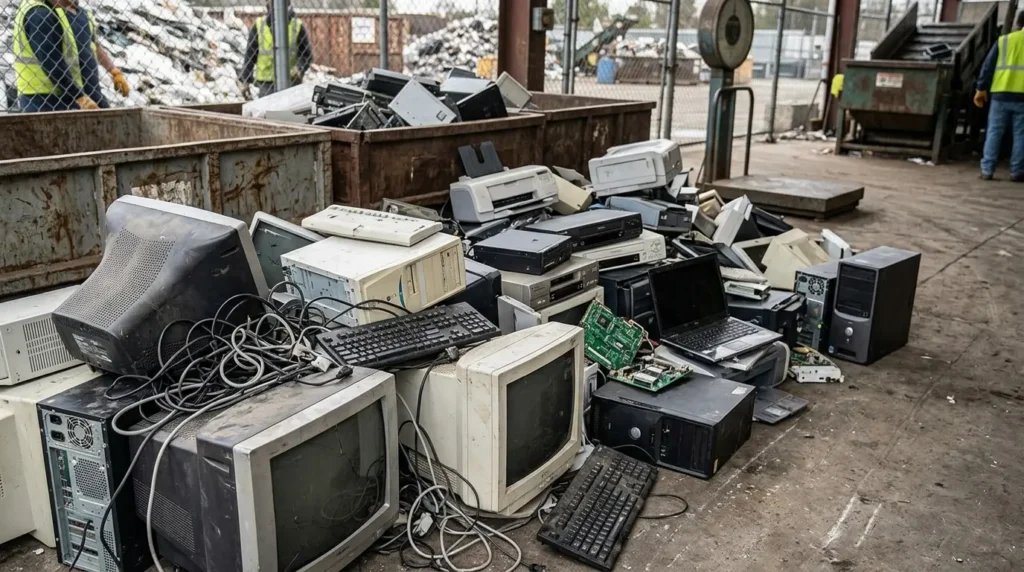
E-waste, or electronic waste, refers to discarded electronic devices such as computers, televisions, smartphones, printers, tablets, and household appliances. You should not throw electronics in the regular trash because many contain hazardous materials like lead, mercury, cadmium, and lithium that can harm the environment and human health if disposed of improperly.
As technology continues to evolve, millions of electronic devices are replaced every year, creating a growing volume of electronic waste. While tossing an old phone, laptop, or appliance into the bin may seem convenient, improper disposal can contribute to landfill pollution, contaminate soil and groundwater, and waste valuable recyclable materials.
Proper appliance removal and electronic waste removal help ensure that old electronics are recycled, reused, or disposed of safely. Understanding what qualifies as e-waste and why it requires special handling can help you make environmentally responsible decisions while protecting your community and reducing unnecessary waste.
In this guide, we’ll explain what e-waste is, why electronics cannot go in regular trash bins, the environmental risks of improper disposal, and the best ways to dispose of electronic devices responsibly.
What is E-Waste?
E-waste covers almost every electronic item that runs on electricity or batteries. Many people only think about phones and computers, but the list goes much further. Old refrigerators, microwaves, washing machines, air conditioners, coffee makers, and televisions also count as electronic waste.
Some common examples of e-waste include:
- Broken smartphones
- Old desktop computers
- Laptops and tablets
- Printers and scanners
- Televisions
- Gaming systems
- Kitchen appliances
- Cables and chargers
- Batteries and power banks
The amount of e-waste grows every year because people upgrade devices more often. Companies also release newer models quickly, which pushes consumers to replace older electronics sooner.
Many electronics still contain valuable parts like copper, silver, and gold. Recycling companies can recover these materials and use them again. When people throw electronics in the trash, those resources go to waste.
Read More: What Items Cannot Be Hauled by a Junk Removal Company?
Why Throwing Electronics in the Bin Creates Problems
At first glance, tossing an old device into the garbage seems harmless. It feels easy and convenient. However, electronics contain dangerous substances that regular trash systems cannot handle safely.
Many devices contain:
- Lead
- Mercury
- Cadmium
- Lithium
- Flame retardants
These materials leak into the soil and water when electronics sit in landfills. Rainwater carries toxic chemicals into underground water systems. That pollution harms plants, animals, and people.
Burning electronics creates another serious issue. Some waste facilities burn trash to reduce landfill space. When electronics burn, they release toxic fumes into the air. Those fumes affect air quality and increase health risks for nearby communities.
Children face even greater risks because their bodies react more strongly to toxic chemicals. Exposure can affect brain development, breathing, and overall health.
The Fast Growth of E-Waste Around the World
E-waste has become one of the fastest-growing waste streams in the world. Millions of tons of electronics enter landfills every year. The problem keeps getting worse because modern life depends heavily on technology.
People now own more devices than ever before. One household may have multiple phones, tablets, TVs, smart speakers, laptops, and gaming systems. Businesses also replace office electronics regularly to stay updated.
Many companies design products with shorter life cycles. Some devices become outdated quickly because software stops supporting older models. As a result, consumers buy replacements more often.
This cycle creates mountains of electronic waste that cities struggle to manage. Without proper recycling systems, the environmental damage continues to grow.
What Happens When E-Waste Ends Up in Landfills
Landfills cannot safely handle most electronics. Once electronic devices break apart underground, harmful chemicals escape into the environment.
Lead from old TVs and computer monitors can contaminate soil. Mercury from screens and batteries can enter waterways. Lithium batteries can even start fires inside garbage trucks or landfill sites.
These issues create long-term environmental damage. Toxic substances remain in the ground for years and spread through ecosystems. Farmers may grow crops in contaminated soil, while animals drink polluted water.
The effects reach humans too. Contaminated water and air can lead to serious health concerns over time. That is why proper electric waste removal plays such an important role in modern waste management.
Why Recycling Electronics Makes a Big Difference
Recycling electronics helps reduce pollution and conserve valuable resources. Instead of wasting materials, recycling centers recover usable parts and process them safely.
Professional recycling facilities separate electronics into different materials such as:
- Plastic
- Glass
- Metal
- Circuit boards
- Batteries
Workers remove hazardous materials carefully to prevent environmental contamination. They then process reusable materials for manufacturing.
Recycling also reduces the need for mining new raw materials. Mining consumes large amounts of energy and damages natural habitats. Recovering metals from old electronics supports a more sustainable system.
Many people do not realize that recycling one small device can make a positive impact. Every properly recycled item helps reduce landfill waste and environmental harm.
The Hidden Value Inside Old Electronics
Your old electronics may seem useless, but many devices contain valuable materials. Manufacturers use precious metals because they conduct electricity well and resist corrosion.
Gold, silver, copper, and aluminum often exist inside phones, computers, and other electronics. Recycling companies extract these materials and return them to production lines.
This process supports a circular economy where businesses reuse materials instead of constantly extracting new ones from the earth.
Old electronics may also include reusable components. Some companies refurbish devices and donate or resell them to people who need affordable technology.
Instead of viewing old electronics as trash, think of them as recyclable resources with real value.
How Businesses and Homes Contribute to E-Waste
Both households and businesses create electronic waste. Families upgrade personal devices often, while companies replace office equipment in large quantities.
Businesses may dispose of:
- Computers
- Servers
- Printers
- Monitors
- Networking equipment
Homes contribute through outdated appliances, entertainment systems, and personal electronics.
Many people store unused electronics in garages, closets, or basements because they do not know how to dispose of them properly. Over time, these items pile up and create clutter.
Professional appliance removal services help homeowners and businesses clear unwanted electronics safely and responsibly.
Common Mistakes People Make With Electronic Waste
Many people unknowingly dispose of electronics the wrong way. Some leave devices on the curb with regular trash. Others throw batteries directly into garbage bins.
These actions create safety and environmental hazards.
Another common mistake involves donating broken electronics that no longer work. Charities often cannot repair severely damaged devices and may still need to dispose of them properly.
Some people also forget to erase personal data before disposal. Old phones, laptops, and hard drives may still contain passwords, photos, banking information, and private documents.
Before recycling electronics, always remove personal data and reset devices to factory settings whenever possible.
Also Read: What Can and Can’t Be Removed by Junk Removal Services in Brooklyn?
Contact Empire State Junk Removal for Electronic Waste Removal
E-waste affects everyone. Every old phone, broken TV, or outdated appliance adds to a growing environmental challenge. Throwing electronics into regular trash may seem simple, but it creates serious problems for landfills, water systems, air quality, and public health.
The good news is that responsible disposal makes a real difference. Recycling electronics conserves valuable resources, reduces pollution, and supports a cleaner future. Small actions from homes and businesses can help reduce the impact of electronic waste over time.
If you need reliable appliance removal or professional electric waste removal, trust Empire State Junk Removal to help. Our team handles unwanted electronics and appliances safely, responsibly, and efficiently. We make the process easy while helping keep harmful e-waste out of landfills.
Frequently Asked Questions
What is e-waste and what are examples of it?
E-waste refers to discarded electronic devices such as smartphones, laptops, televisions, printers, tablets, gaming consoles, and household appliances. Any device that runs on electricity or batteries qualifies as electronic waste once it is no longer in use.
Why can you not throw electronics in the regular trash?
Electronics contain hazardous materials like lead, mercury, cadmium, and lithium that leak into soil and groundwater when sent to landfills. These toxic substances cause long-term environmental damage and pose serious health risks to nearby communities.
What happens to e-waste in landfills?
When electronics break down in landfills, harmful chemicals escape into the surrounding soil and water systems. Lithium batteries can also start fires, while toxic fumes released during waste burning create serious air quality and public health concerns.
Can old electronics be recycled for valuable materials?
Yes, old electronics contain recoverable materials including gold, silver, copper, and aluminum. Certified recycling facilities extract these materials safely and return them to manufacturing, reducing the need for environmentally damaging raw material mining.
How should you dispose of old electronics responsibly?
Old electronics should be taken to certified e-waste recycling centers, retailer take-back programs, or local government collection events. Always wipe personal data from devices before disposal and avoid leaving electronics on the curb with regular household trash.
